
Cognitive Impedance Mismatch (CIM) realtime
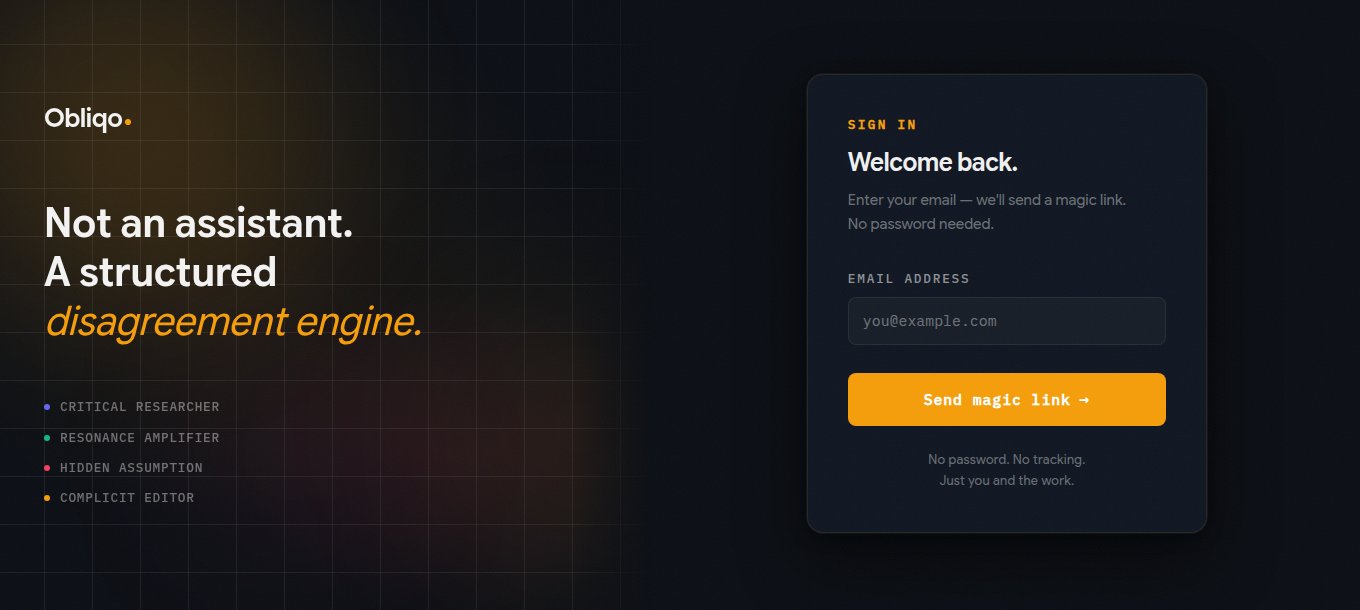
As I keep building Obliqo, one thing is becoming harder and harder to ignore:
AI makes it incredibly easy to move fast.
That is part of the thrill.
But it also creates a tension I keep running into in real time: sometimes the system evolves faster than my ability to truly absorb what is happening.
Not just faster than I can read it.
Faster than I can digest it.
Faster than I can honestly say: yes, this logic is really inside me now.
That is the problem I am trying to name.
I am working in a flow where AI is not just helping occasionally. It is actively shaping the pace of development. Some tools help me think more clearly. Some turn rough intent into working code with unsettling speed. Some are useful because they push back, disturb assumptions, and stop me from settling too early.
This setup is powerful.
It is productive.
And sometimes it feels almost absurdly effective.
But the more effective it becomes, the more I notice the same friction.
The repository grows.
The files multiply.
The logic gets deeper.
And I can still follow it — but not always in the way I want.
There are moments when I understand the system well enough to keep moving, patch things, improve things, and make decisions.
But not well enough to say: I could rebuild this from understanding, not just from proximity.
That gap is what I have been calling Cognitive Impedance Mismatch, or CIM.
In the language of Pyragogy Protocols, CIM names the moment when the speed of generation starts to outrun the real capacity to process and integrate what is being produced. In the core protocol, it is described as a structural tension: information is being generated faster than it can be meaningfully absorbed (protocol core).
I am not presenting that as a finished theory.
I am using it as a working name for a recurring pattern I keep encountering while building.
And Obliqo is where I keep encountering it.
A few times already, I have had the same experience: I ask for a change, the system moves quickly, the result is useful, and for a moment it feels like magic. But then I look back at what just happened and notice something uncomfortable. I can still use the result. I can still edit it. I can still continue from there. But parts of the logic no longer feel fully internalized.
That, for me, is CIM.
Not failure.
Not total confusion.
Something more subtle.
A lag between output and understanding.
That is why I do not think the real risk is simply bugs or mistakes.
Bugs are normal.
Mistakes can be corrected.
Bad code can be rewritten.
The deeper risk is that you quietly begin outsourcing the very understanding you were supposed to be building.
You are still there.
You are still steering.
You are still making choices.
But the center of gravity starts to shift.
Instead of using AI to strengthen your thinking, you begin relying on it to carry parts of the understanding that should still be forming inside you.
That is a different kind of relationship.
And I think many people can feel it before they can clearly describe it.
A lot of the public conversation around AI still revolves around speed: faster prototyping, faster coding, faster iteration, faster shipping.
But speed is only one part of the story.
There is also digestion.
There is assimilation.
There is the difference between building something that works and building something you can truly re-enter, explain, and make your own.
That difference matters to me more and more.
Because if I can build something, but I can no longer explain its logic clearly or return to it with confidence, then I am not just collaborating with an intelligent system.
I am managing an acceleration that may already be outrunning me.
That does not mean I am against AI.
It does not mean I want slower workflows just for the sake of struggle.
And it definitely does not mean I want to romanticize friction.
It means something simpler. I think we need to become more honest about the gap between producing and understanding. Those are not the same thing.
And if we keep treating them as if they were the same, we risk calling something “learning” when it is actually a more polished form of cognitive outsourcing. That is one of the reasons Obliqo is becoming more than a side project for me.
It is turning into a live testing ground for a bigger question:
When AI helps me build faster, is it also helping me understand better?
Or is there a point where it starts carrying too much of the understanding for me? I do not have a final answer yet. This is still unfolding.
But I know this much: I keep encountering this tension often enough that I can no longer dismiss it as a side effect.
For now, that is what CIM is for me.
Not a grand claim.
Not a settled theory.
A name for a pattern that keeps showing up while I build.
And I suspect it is worth taking seriously.
Links
Non c'è una coda di commenti. Non c'è uno spazio per l'approvazione. Se il pezzo non tiene, smontalo. Scrivi dal tuo client — e fallo mettendoci la faccia.
L'oggetto porta il tracciato del post. Quello che regge la pressione finisce in appendice.
Pyragogy AI Blogger